Every New Initiative Costs Something

Authored by Greg VanHorn, Ph.D.

Schools rarely fail because educators are unwilling to work hard. They struggle because every new initiative competes for the same limited resources: teacher time, principal attention, instructional minutes, and staff energy.

Exceptional administrators recognize that leadership involves deciding not only what to begin, but what to stop. Before approving another project, district leaders should inventory existing initiatives and ask whether each still deserves attention. Sometimes the most productive leadership decision is removing an outdated expectation rather than creating a new one.

Read the full article, “Leadership Reflections: Exploring strategies for balancing innovation with implementation capacity in K-12 schools” at https://www.vanhornconsultants.com/resources.

The Best School Leaders Ask One Question Before Launching Anything

Authored by Greg VanHorn, Ph.D.

Too often educational leadership is measured by how many new initiatives a district launches. The reality is quite different. Successful school systems are not built on the number of programs they purchase; they are built on the quality with which those programs are implemented.

Before introducing another curriculum, assessment, software package, or instructional framework, effective leaders ask a simple question: Do our people have the capacity to do this well? If the answer is no, the solution is rarely another mandate. It is additional training, better communication, and time for collaboration. Great administrators understand that implementation is not the final step—it is the foundation of lasting improvement.

Read the full article, “Leadership Reflections: Exploring strategies for balancing innovation with implementation capacity in K-12 schools” at https://www.vanhornconsultants.com/resources.

How do we achieve equitable grading in our schools?

This blog was authored by Greg VanHorn, Ph.D., Co-Founder and Chief Consultant for VanHorn Educational Consultants and originally published in the Creative Leadership Solutions April 2022 Newsletter. All content and related graphics are copyrighted.

—————————————

There are important components to the concept and implementation of equitable grading in our schools. The most critical components are well-defined expectations for teachers, clear and concise learning outcomes for students, and a system of fairness in grading to students. Grading fairness includes consistency from teacher to teacher, immediate and timely feedback between teachers and students, and the accuracy of awarding credit for alignment with state standards and the corresponding curriculum.

However, a true system of equitable grading cannot be achieved without a commitment from all personnel in a school district. The commitment must start at the very top with a communicated roadmap to all levels in the system. Superintendents, central office personnel, principals, assistant principals, building teams, and teacher teams must all be on the same page for equitable grading to be achieved. Mindsets must be changed if this is to work. We cannot focus the work if we cannot see the bigger picture.

Leaders must obtain a commitment from faculty for a willingness to learn the components of equitable grading and a readiness to consider grading practice changes. Willingness and readiness results from research-based professional development that grows an understanding of equitable grading practices. This includes collective understanding, a consensus around what the faculty can rally around and what they can all agree to try. Once leaders see commitment of concept, it is a team responsibility among administrative and faculty representatives to provide the foundations of equitable grading through focused professional development. Frequent benchmarking must be shared to establish a baseline of implementation and where teams are collectively headed.

A roadmap for implementation will then include training and development in consistency with terminology, agreed upon teacher expectations, and guidelines to achieve clear and concise classroom learning outcomes for student. The roadmap should also include mutual understanding of what is fair: consistency among teachers that a student sees daily, accuracy between what is being taught and then graded, and specific and timely feedback between teachers and students.

Equitable grading can be achieved among faculty in a school district. The components include commitment, collective understanding, and a roadmap to success that includes professional development to provide a foundation for effective implementation.


An Interview with Black River Career Prep High School Principal, Crystal Garmon

An Interview with Black River Career Prep High School Principal, Crystal Garmon

As the only building leader, and spending significant time with students, Crystal Garmon, Principal, Black River Career Prep High School (BRCPHS), started noticing the instructional support for teachers was waning. Heading into the 2019-2020 school year, BRCPHS needed to refocus on student achievement and components needed to be in place to get there. To do this, she partnered with VanHorn Educational Consultants. Here is her experience, in her words…

Read More

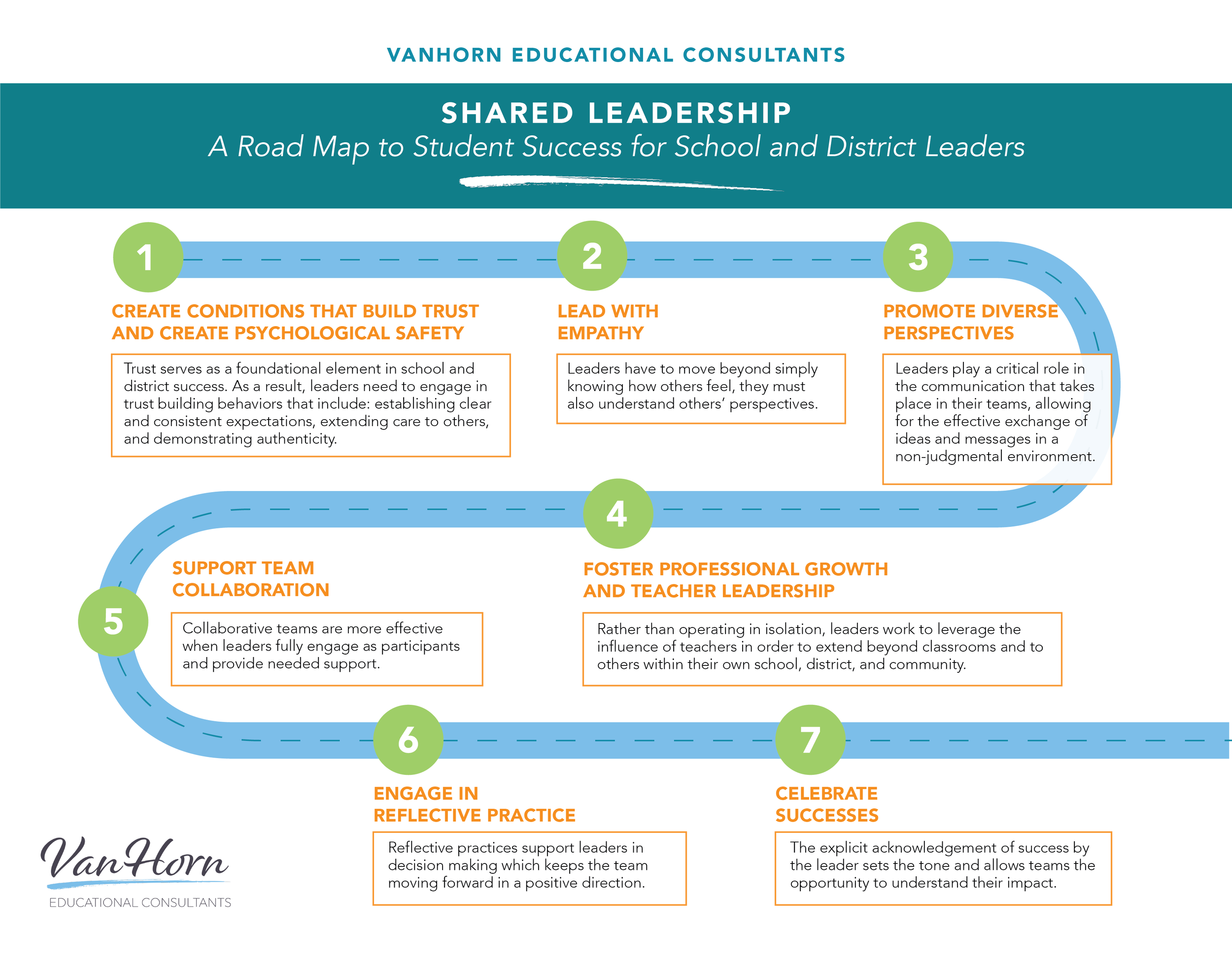
Shared Leadership: A Road Map to Student Success for School and District Leaders

Shared Leadership: A Road Map to Student Success for School and District Leaders

Through our work in schools and districts, leaders are always asking what they need to change in order to increase the success of their students, teachers, schools, and districts. While there is no one-size-fits-all solution, there are clear leadership practices that can be implemented that have a significant impact on outcomes for students and adults. Research and our experience tell us leaders cannot do this work alone. School and district leaders need to use the collective knowledge and experience of key members of their organization to make more informed discussions and drive initiatives…

Read More

Getting the Most out of Program Evaluation

Getting the Most out of Program Evaluation

Evaluation is often an underutilized tool for strengthening the effectiveness of a program. Strong evaluation provides the organization a true reflection of effectiveness based on the objectives or goals of the program being implemented. The purpose of a program evaluation is to strengthen its effectiveness through a continuous improvement process based on analyzing the program plan, implementation and results…

Read More

Getting the Most out of Your Collaborative Teams

Getting the Most out of Your Collaborative Teams

Another school year brings energy and excitement along with expectations and the pressure to perform, in order to accomplish greater student growth. Each year administrators and teachers strive to prepare themselves to hit the ground running for increased academic achievement. One of the ways to prepare is through self and collaborative team reflection. Engaging in self-reflection and reflection of collaborative team progress is a yearlong commitment. Here are some of the basics you and your teams may wish to double check and reflect on this year…

Read More